Written on 4:27 PM by Robert
I've been working as an intern now for about 6 months, and I have to say that it's been the best career choice I've ever made. I would not have been here if it wasn't for the fact that I decided to go back to school for a Master's degree. In 6 to 9 months, I should have my degree in hand. I will also have a solid year of C# experience under my belt. Which one of these two are most valuable? I suppose it's a matter of debate.
In one of my previous posts, "
Is a Bachelor's Degree Enough Nowadays?", I explored the possibility of higher education being more valuable than work experience based on what I was seeing as a job hunter at that time. That article ignited some debate about the validity of that statement. I have to clarify my position and stating that a combination of both "upgrades" are important when looking for new opportunities.
A computer professional (whether they specialize in hardware or software) searching for a lucrative position should look at his or her situation objectively. You need to ask the following questions:
- Have I learned something new this year?
- Will another degree benefit me?
- Am I focusing on the right things in this field?
Learning the latest and greatest technologies (hardware or software) will give you an edge in the job pool. Mentioning these skills in your resume will get you noticed above all others.
If you don't have a degree, think about getting one. Applying for an available position is a very competitive process and you need whatever edge you can get above the other applicants.
If you like what you do but are getting bored, then maybe you need to learn a new programming language (for example) and try coding with that for a while. You are still doing what you love to do, but adding a new twist and breathing new life into your skillset.
A degree, as well as experience, are just tools - means to an end. The same can be said about certifications. We can debate about which one is more valuable than the other, but the bottom line is getting THAT JOB by any means necessary. Go into that interview room with added confidence knowing that you added that little extra something to your resume.
I've mentioned internships, degrees, certifications, and new skills as ways to enhance your situation in the job market.
So what other things can an unemployed computer professional do to help them with their job search situation?

Posted in
career,computers,degree,education,jobs,programming,unemployment
|

Written on 11:18 AM by Robert
I keep saying this is my final post on this blog, but here I am writing another one! lol
So what have I been up to since my last posting? That's a good question. My newer blog never got off the ground after my second or third posting because I just never had the time to research topics to teach about. I was continuously trying to get that ever-elusive job offer. Then I got a call to interview for a position I had applied to months earlier.
The position was for an IT Support Assistant for a 3 month contract in a local college here in Brooklyn. The pay was horrible, but I was willing to break my long streak of being unemployed with anything I can add to my resume. The interview went incredible smoothly and I had the immediate feeling that the job was mine. A day later, I received the phone call that I can start on the next Monday.
The job was super-light compared to what I was used to working in the Manufacturing industry. All I had to do was answer the phones and provide level 1 support for a college web application. I also helped out with technical support in the computer lab, but the problems were very few. I gave myself the added responsibility of creating a VB.NET / ASP.NET application for them in the ample spare time I had and added that fact to my resume.
The application was basically a combination of an inventory listing of every PC in their main computer lab, as well as a troubleshooting log. The log showed the trouble history each PC had and how the problem was resolved (and by who). The list was sorted by "Station Number", but behind the scenes (using SQL Server Express), the data was linked by MAC Address. It was a simple application that gave me some more hands-on experience with ASP.NET.
When that assignment was over, it took about 2 weeks for me to land my latest venture. I'm now an intern for a major New York City government agency's IT department. It does pay something (even though its a small salary) and the experience gained from this position will elevate me to the big leagues in no time. The shop uses all sorts of technology, including VB.NET, C#, ASP.NET, SQL Server, and Oracle. I know I have tons to learn, but that's why I'm here!
So, while I sit here on my first week of my new job, my only advice to any of you still trying is to NOT give up, and to try any job (including internships) to get your foot in the door at a great company.
Good luck, and let me know about your IT job-hunting stories you might have!
Posted in
ASP.NET,career,government jobs,internship,jobs,programming
|
Written on 4:01 PM by Robert
I am happy to announce that I have created a new Wordpress-based blog named
Journey Into Programming. This new site will explore all sorts of programming techniques, but it will be geared towards the absolute beginner.
I will feature programming languages such as HTML, Visual Basic, and ASP.NET. Later on, I will feature languages I will be learning along with you. Hopefully, you would be willing to take this journey with me.
I'd just like to thank everyone who's been following this blog since I started it over a year ago. Stick with me - the best is yet to come!
Posted in
ASP.NET,blog,PC,programming
|
Written on 9:50 AM by Robert
I know I've been out of the loop from the blogging world for a while, but I've been trying to concentrate on finding work. I've also started a refresher course on ASP.NET in order to compete with today's programming environment.
I created a new business site for a friend. He is running a Cleaning and Restoration business and needed a web site. The name of his company is Strictly Cleaning Restoration and is based in Brooklyn, NY. During this time, I learned a lot about SEO rules, GoDaddy.com requirements, as well as sharpened my skills in CSS, HTML, and ASP.NET. The web site still has a little work left on it, but I hope to hear from some of you about any tips or suggestions, even some criticism.
As far as blogging is concerned, I think I will be wrapping up this blog very soon. I plan to create a new one for developers starting out with ASP.NET for the very first time. I'm still thinking of a UNIQUE name for the blog. I hear "Adventures in Programming" is already taken, so once I think of a good name, I'll get to work on that. I may use WordPress for that one, just to be familiar with it.
So I'd love to hear from you about any of these topics! Just send me a message!
Posted in
ASP.NET,programming
|
Written on 11:53 AM by Robert
It's been a while since I've blogged about my journey through unemployment, but now I have a few lessons to share about my experience. Hopefully you can apply some of these ideas in your situation.
- Learn Open Source! If you're a programmer, or aspire to be one, learn some Open-Source languages. Get that under your belt and add it to your resume. These are some of the only programming languages that are ok to learn without having the work experience to back it up.
- Be a temp! Find a local staffing agency that may be willing to utilize these new skills as a temp or a consultant. This will add to your resume and give you credibility so you can have a better footing when the job market turns around.
- Go back to school. Whether you need to complete your Bachelor's degree or continue with a Master's degree, elevate your educational worth by making this investment. Obviously you can't afford it now, so get a loan and head to an inexpensive but well-known school. This will also increase your career's net worth.
- Map out your career. I've never done this while I was younger, but you need to know where the future lies careerwise. Start from the bottom and work your way up - but always keep your eyes on the goal. I just found this PDF from the Workforce Development Council of Seattle, which spells out the career paths of several careers, including Infornation Technology.
- Use LinkedIn! I went to a very informative workshop at my school last week by John Crant, a job search guru, among other hats he wears. I've learned that you should spend less time in the day on job boards like Monster and more time researching companies on LinkedIn. You can find people on LinkedIn with the position you might want, and see what companies they currently work for, as well as the companies they used to work for. From there, you can search for the hiring managers at those companies, then contact them directly.
I still have a lot to learn and need to implement some of these great suggestions in my own life.
If you decide to follow some of these suggestions, or if you disagree with something I've said, or even if you have something to add, just post a comment to this entry so we can all discuss it! I'd love to hear other suggestions!
Posted in
career,degree,education,jobs,programming,school,unemployment
|
Written on 1:25 PM by Robert
In my situation, I am currently receiving unemployment checks while my wife still works for the local government, bringing home the fatty part of the bacon. I'm grateful for that because it helps out tremendously with the few bills we still have. I also need to realize that my wife needs a vacation, even though we can't afford to go away. How are we going to manage this? Very frugally!
I understand most people who are unemployed are in one-income households. The suggestions that require a small expense may not be feasible for those people. Those who aren't unemployed and read this post can also benefit by some cost-cutting suggestions.
First of all, plan on staying close to home. There are no sleep-overs, unless you can sleep over a relative's house. I don't know about you, but I've never felt comfortable enough to stay over anyone's house unless it was an emergency - everyone may have different opinions on that, however. As you know from my previous posts, I don't own a car anymore, reducing my monthly (and weekly) payments tremendously. Those who don't live in a metropolitan area do not have that luxury. Those who do should think about making the local transit system their friend.
Here are a few suggestions for spending a great time with your kids without spending a lot of money.
- Go to your local zoos. Kids love animals, and local zoos don't cost much for admission. I'm actually going to splurge and have my wife buy tickets for the Bronx Zoo, which is usually pretty expensive. As a city employee, she gets discounts on admission to many city attractions. Do research on your favorite attraction. The Bronx Zoo, for example, has "pay what you want" Wednesdays - but the catch is no ground transportation on that day.
- Check out the local parks, especially the ones you've never gone to before. It is like an adventure every time you take children out somewhere new. Here in New York City, there are dozens of parks throughout the city. There has to be a few that you'd like to check out: http://www.nycgovparks.org
- Free lunches!! Here in NYC, many public schools offer free lunches for all children (and sometimes their parents). Most of those schools also keep their playgrounds open as well, so the kids can work off that meal afterwards. Take advantage of this and save some money!
- Local piers and beaches are good as quick trips for relaxation.
- Free pools! There are tons of free swimming pools in the city, for those who don't mind the company. I, for one, can't stand the thought of how unclean the water is. That's why I searched online for local spots that charge small fees for the use of their private pools. Some local hotels may offer this, and would be worth looking into.
- For the kids who enjoy techie attractions, you can take advantage of some of these locations as well (unfortunately, these are only in the NYC area - but web search for similar attractions in your area):
- Sony Wonder Technology Lab (free admission) - hands on science experiments for kids
- NY Hall of Science ($11 adults, $8 for kids and free when school is in session) - larger science hall for kids
- Nintendo World (free admission) - Bring your DS and play with others, download demos, or just browse through tons of merchandise. This is not recommended for kids who always want to buy stuff, but for those who can appreciate playing demos of games and just having fun.
Enjoy your summer! Let us know what other tips you'd like to pass along! And as the final point - when it comes to eating, check out this MSN article on how to eat cheaply:
http://articles.moneycentral.msn.com/SavingandDebt/SaveMoney/HowCheapskatesDoDinner.aspx?page=all
Posted in
money,saving,vacation
|
Written on 12:48 PM by Robert
I know it's been a while since I posted anything. Although I'm still unemployed, I am happy to report I completed the requirements needed to receive my Bachelor's degree in Computer Science. Does that change anything in my status? Not at all - not yet. I still believe you need more than a Bachelor's degree to make an impact in the job market in IT.
My road to success is a long and difficult one, but one where I see light at the end of this dark tunnel I seem to be stuck in. Phase one is complete, with my 4-year degree in hand. What's next?
1) .NET Certification - I have VB .NET experience. Unfortunately, the experience is in Windows programming. I know the industry is focused on web programming, but the fastest road to certification is to be certified in something you are already familiar with. After I'm certified in Windows programming, I can set my sights on web programming certifications down the road.
2) Continuing my education - I decided to get into my school's Master's degree program in the Fall. This means I need to prepare for the GREs fairly quickly.
3) Keep learning - I need to keep up with the latest technologies, particularly open-source programming languages. A great site to start would be Dev Shed, a site for programming tutorials. The more you learn, the better chance you have to land a programming or developer position.
4) Keep putting yourself out there - It's frustrating to keep applying to jobs that seem to be filled before you get to interview for them. I need to learn to set up informational interviews. I need to be more active on LinkedIn groups, on Facebook, and on Twitter in order to attract some attention from the right people. I need to keep refining my resume, contacting more recruiters, and going to career fairs.
Why should you care? Well, if you are in the same boat I'm in, use my example as a template to follow for your own personal situation. The U.S. unemployment rate for May was 9.4% and being one of the thousands out of work is little comfort. The bottom line is that you should have your own "economic recovery plan" so we could start pulling ourselves out of this hole we seem to be in. Good luck!
Posted in
career,degree,education,financial,jobs,layoff,money,programming,school
|
Written on 10:08 AM by Robert
I've learned recently the importance of keeping a job search log. I've been out of work for months and started a log early on, but as time went on I stopped updating it out of sheer laziness. But there is sound reasoning the "madness" of keeping such a detailed log.
The most important reason of keeping such a log is for the followups. When you apply for a job online or receive a call from a recruiter, keeping a record of this action is crucial. As a job seeker, it is absolutely important to keep tabs on the positions you apply to. If you apply to ten jobs in a week, you will have to contact these companies (or recruiters) in a few days or a week. They respond quickly to people who seem to be very interested in the position. A log like this is important to keep these position requests organized.
Another important reason to have this list is in case someone important requests it. Your local department of unemployment may request it (in normal circumstances) to prove your willingness to search for work. A recruiter may also request this list to make sure they are not sending your resume out to a company you have already applied for.
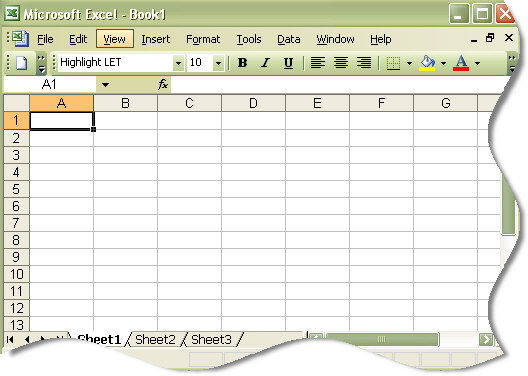
In order to create a decent log, use Microsoft Excel to create a spreadsheet. Make sure you include the name of the position applied for, the name of the company, the recruiter's company or web site where the position was found, the date you applied for it, and the name and phone number of the contact. A week after you apply for the position (at the latest), contact the person you dealt with to see if the position has been filled. Express your desire to obtain this position and hopefully it should increase your chances of getting it.
It's as simple as that. Keep organized and increase your chances of success.
Any thoughts?
Posted in
files,jobs,unemployment
|
Written on 11:30 AM by Robert
Scala is an object-oriented language that can be used in the Java and .NET platforms. Released in 2004, it has slowly gained strength and popularity. Early this year, Twitter announced it has changed part of its backend to Scala in increments.
But why is Scala so hot lately? Twitter developers Steve Jenson, Alex Payne, and Robey Pointer sat down for interview earlier this month, where they explained why they chose to move away from Ruby on Rails and use Scala. Here's some of what they had to say:
Steve Jenson: "One of the things that I’ve found throughout my career is the need to have long-lived processes. And Ruby, like many scripting languages, has trouble being an environment for long lived processes. But the JVM is very good at that, because it’s been optimized for that over the last ten years. So Scala provides a basis for writing long-lived servers, and that’s primarily what we use it for at Twitter right now. Another thing we really like about Scala is static typing that’s not painful..."
Robey Pointer: "Also, Ruby doesn’t really have good thread support yet. It’s getting better, but when we were writing these servers, green threads were the only thing available. Green threads don't use the actual operating system’s kernel threads. They sort of emulate threads by periodically stopping what they are doing and checking whether another “thread” wants to run. So Ruby is emulating threads within a single core or a processor. We wanted to run on multi-core servers that don’t have an infinite amount of memory... I think of it as, the higher the level of the programming language, the less you have to type to do more. To me, languages like Ruby, Scala, and Python are very high level, because you can write a few lines of code to do what might take ten or twenty lines in Java, or 250 lines in C."
So they incorporated Ruby with Scala on Twitter. This language is a good direction to head towards if you already know Java. So as a developer, how do you get started learning Scala?
Steve Jenson: "Just try it. Make a starter project. Go for it."
Alex Payne: "There’s great code on GitHub. There’s a growing Scala community there. David Pollak and the rest of the Lift committers have put Lift on GitHub."
- I don't know about you, but I think I'm going to give this language a look. Thoughts?
Posted in
programming
|
Written on 4:47 PM by Robert
Thirty years ago, when someone would graduate from college with a Bachelor's degree, they were pretty much guaranteed they would get a well-paying job in their field of expertise. Anyone with a Masters degree or higher were probably doctors or lawyers. The pride of saying that you had a Bachelor's degree was a privilege not many people had. The fact that the drop-out rate for high school graduates was high at the time was also a factor.
Today, there are less people who are satisfied with a high school diploma. Most people who graduate from high school go on to get a Bachelor's degree. What exactly does that mean? Well, it means that if you are one of those people with a Bachelor's degree, you have a LOT of competition out there. If you are coming out of college with a degree and no experience, then you'll be like the hundreds of others who just graduated, and is after that job you want to land. It's depressing, to an extent - that the 4-year college degree has less worth than it did decades ago.
So what can you do to stand out in that sea of academic clones in the job market?
- Get your Masters Degree (or PhD). Yes, it will take more time and money, but if you read over the course descriptions of the required classes you will be taking, you will find that these courses are more relevant to the job requirements found in the real world.
- Internships. Apply for whatever internships are advertised at your school. That could be the step in the door you need to work at that place in the future.
- Get a job while you're in school. If you're lucky enough to get a full-time job in your field of study without a degree, make sure you complete your degree at night. It's easy to fall into the trap of being caught up in the job and forgetting about the degree and career path. When a degree is achieved, you will have that experience under your belt already and will have a leg up on the competion.
The choice you make may not be the best choice for everyone, but its important to remember that there is always a choice.
Can you think of another option? Please add whatever else you think should be added to this list.
Posted in
career,degree,jobs,school
|
Written on 1:06 PM by Robert
 This is a followup to my previous topic about Visual BASIC, since I wanted to clarify a few things and expand upon that discussion.
Visual BASIC is not the same a Visual BASIC .NET. For one, The .NET Framework allows the VB program (with major modifications) to interface with web capabilities that VB6 could never do. A VB6 programmer will have some minor learning curve migrating his applications over to VB .NET (Winforms), but will quickly adapt to the new syntax changes. I was one of those people who became used to VB .NET rather quickly without formal training. Sure, I had to Google for a few solutions, but this is expected when working with a relatively new language.
Most graduates of a Computer Science program are adept at using C++ in more than one of their courses, whether it be in a Windows or a Unix environment (or both, in my case). When working in the real world, these college graduates will gravitate towards languages that are similar in syntax - like C#, Java, and Javascript. Obviously, these languages are not the same, otherwise we wouldn't have different names for them! I believe there are two reasons these languages are so popular. Most people are familiar with C++ and find it easy to work with similar languages. The other reason is that Windows itself is written in C++, which is a subliminal reason to stick to what works.
I have found, in my experience, that there was nothing I couldn't accomplish using VB .NET that was asked of me to do. There may be advantages to using C#, but I personally wouldn't know. On that path of thinking, recruiters should realize that if someone is familiar with C++, then they can easily grasp C# and Java. Someone familiar with VB .NET can also easily grasp C# and Java if they have a college degree in Computer Science. It seems unfair that those who chose to start their career using VB and VB .NET have a harder time to achieve a C# position if they have never had any previous professional experience using it.
Any thoughts?
Posted in
career,computers,jobs,programming
|
Written on 11:05 AM by Robert
 I wanted to write a little something about a programming language that I used at my previous job - RPG. I used two different versions of this language (versions III and IV) on an IBM AS400 minicomputer (currently known as the IBM System I). Not many recent college graduates have heard of it, but 20 years ago it was a hot tool to use - especially for companies who wanted to come up with a quick way to create reports.
RPG, which used to stand for Report Program Generator, is a language still used on mainframe and minicomputers today. The language is a linear one, just like the "competitors" of its day: Forttran, Assembler, and COBOL. It was originally created in the 1960s and was known as FARGO, used primarily for IBM's 1401 computers using punch cards.
As computer systems evolved, so did RPG. Several versions emerged over the years, including RPG II, RPG III, and finally RPG IV in 1994 (also known as RPGLE). Today, RPG IV is a more robust language than in was in 1994. In 2001, IBM's OS/400 operating system for their AS400 systems developed a "free-form" or "free-format" style to the syntax. This made programming seem more like many of the other mainstream programming languages. RPG has the ability to link up with Java objects and can be used with toolkits to create web pages. Here is a little sample of what an RPG program (with "free-form" looks like).

When I first started to learn RPG on the corporate AS400 system, I thought I was learning a dead language on an antique system. The truth is that IBM continues to create newer servers that support the OS/400 operating system. Ten years ago, the AS400 system at my old job was updated with a server with a 64-bit processor - something that we didn't see in Windows servers for another 5 years or so.
Here's another fact that I didn't know. There are major
corporations that still use the AS400/System I as their main server solution. Some in New York are
HSBC Bank,
Duane Reade, and
Time Warner Cable!!
I always thought learning RPG was a crutch in my career, but now I see how important it really has become. It has also proved to be adaptable and constantly eveolving through the decades.
Posted in
AS400,computers,programming
|
Written on 10:42 AM by Robert
BASIC was the first programming language I ever learned. I learned it in my senior year of high school and in the computer club I played games written in that language on the original TRS-80 computers they used. In case you've never heard of the Radio Shack TRS-80s, here is a picture. Reading about the
history of the BASIC programming language has also made me nostalgic lately.
In college, after taking all sorts of programming courses (Assembler, Pascal, C, C++), I took a course in Visual BASIC 3.0. It was the most interesting programming course I've ever taken because of its GUI capabilities. It seemed like anything was possible to create with this version of VB. Later that year, I was hired by my previous employer as a PC technician specifically because I had knowledge of Visual BASIC. Through the years, I self-taught myself to use the next versions of Visual BASIC - 4.0, 5.0. 6.0, then .NET.
I worked there for 14 years using similar technologies - VB Winforms, RPG/400, and ASP. Now that I have been laid off, I realize that I should have pushed for more modern languages. C# has seemed to take over as the .NET standard. Java, PHP, MySQL, and any web-based scripting tools have also become increasingly utilized.
Now, I've been reading several articles about the death of Visual BASIC. C# has proved to do more than VB .NET can. One
article claims that there is absolutely no future of Visual BASIC. According to another
article, developers who use .NET prefer to use C#, but Winform developers prefer using VB6 than .NET (since .NET can be used for web and Windows applications). This is based on data taken from a survey done several years ago.
The conclusion is that if you are a web developer trying to figure out which language to use, stay away from Visual BASIC. There are a half dozen programming languages that are more widely used. Winform development, in my job-hunting experience, seems to be a skill that is not as popular as it used to be. If you already have Winform programming experience (like myself), you would be useful doing Windows to Web application conversions.
Posted in
computers,programming
|
Written on 1:02 PM by Robert
One of the things I've learned soon after I was laid off was how to cut back on expenditures. Some of the things I'm about to mention I've implemented years ago, and some I'm still working on. Hopefully you'll have better luck than I have had with respect to all of these tips.
1)
Get rid of that car! If you live in a large metropolitan area (like NYC), do you REALLY need a car? I live in Brooklyn and have not needed a vehicle on a day to day basis in over 6 years. This saves you on car payments, insurance payments, gas purchases, and maintenance. Can you calculate how much money YOU would save monthly just by cutting back on a vehicle? I can imagine owning a car can easily cost over $500 a month.
Use mass transit to get from place to place. It will become second nature. If you want to go away for the weekend or go on vacation, you can rent a car for that time. It will be much cheaper in the long run.
2)
Combine your bills. If you watch cable (or satellite, or FIOS), combine that bill with your phone and Internet services. You will definitely be saving money on a monthly basis. You will also have less bills to pay, making this a lot simpler for yourself. If you can combine your gas bill and your electricity bill, go for it! Combine your car insurance (if you decide to stick with one) with your home insurance (if you own a home). If you have multiple loans or credit cards to pay, try to consolidate them (assuming the interest rates wind up being better).
3)
Start shopping with coupons. Cut supermarket coupons before going shopping and stock up on the sale items to last a few weeks. Do you need to buy something online? Then search the Internet for online coupons. There are tons of merchants who accept online coupons - why not take advantage of them?
4)
Stop eating out as much. This is something I still need to work on. Cutting back on eating out for lunch and dinner will save you the most money per month. If you haven't done so already, estimate how much you spend a week eating out. Then multiply it by 4 weeks. This monthly expenditure is scary! Cut back, if you can.
If you can think of any other money saving tips, please post and share!
Posted in
money,saving,unemployment
|
Written on 11:12 AM by Robert
 Most employed people that I know work for a private company and are fairly familiar with that environment. However, many people have never held a government job. What are the advantages (and disadvantages) of holding a government position?
Here are some of the advantages:
1. A pension. This is arguably better than a traditional 401k plan.
2. The financial services of a credit union or similar institution. Mortgages and other loans with great interest rates are always a welcome perk.
3. Your position is a measure of company status. Raises come at regular intervals (based on the economy, of course).
4. The higher your position, the more administrative power you hold - not always true in the private sector.
5. It is much harder for a government employee to be let go than a similar job in the private sector.
6. Some government agencies encourage hiring your relatives.
7. A more relaxed working environment.
8. A great benefits package.
Here are some of the disadvantages:
1. Government jobs offer a lower starting salary.
2. Promotions are few and far between.
3. Pay increases are smaller than they would be in the private sector.
4. Regulations. Government jobs come with tons of rules to follow.
If you had a choice between pubic and private sector jobs, do your research. Find out what would be a deal-breaker for you.
Anyone working for the government who wants to add something to this list? Any comments?
Posted in
career,government jobs,jobs
|
Written on 10:44 AM by Robert
Emotions definitely come into play when you go through a layoff. I think the first emotion we have after a layoff (besides anger) is shame. Being jobless is traditionally a "bad" thing to have happen to someone (especially yourself). When you tell someone you've been laid off, the first reaction they give you is a pitiful, "I'm so sorry!" There is a period of time that you naturally want to hide this fact from most of your acquaintances and some family members to avoid the feeling of shame.
This shame seems to stem from the feeling that you are somehow responsible for your current situation. The fact is that if you are a casualty of the economy, and it has happened to millions of people just like you.
The shame you initially feel should eventually become acceptance. When you begin admitting you have a problem, that is the beginning of your personal recovery. Admitting you have a problem to others invite others to help.
Ok, being "proud" of being unemployed is probably stretching it a bit. However, the more people you tell about your unemployment issues, the greater the chances become that someone will connect you with that ONE opportunity that will get you your dream job. Isn't that the ultimate goal for the unemployed professional?
Do you think you should spread the word if you are unemployed, or keep it to yourself?
Posted in
jobs,layoff,unemployment
|
Written on 2:13 PM by Robert

I got to the Jacob Javits Convention Center at around 10:30 - a full half-hour before the beginning of the Big Apple Job Fair. Registration was in the lower level and there was already a good sized line ahead of me. We were told immediately that we would not be allowed in if you weren't in a suit and tie (for the men) or didn't have your CUNY id card. By the time the organizers started to let people in, the line behind me stretched WAY down the long corridor. Local news crews were filming us on line, and photographers were taking pictures of the crowd as well. At 11:00, the line started to move and in no time I was at the registration desk, handing in a copy of my resume and receiving a bag full of brochures and a layout of the floor plan.
After registering, we followed the signs to the upper level. I had done my homework a few days ago, so I knew which employers I wanted to visit. The floor was fairly crowded, but I managed to visit all the employers I wanted to see, and even visit one that wasn't on my list - which was a waste of time. Lesson: Only visit the employers that are hiring for your field. Otherwise you will be wasting time.
Some employers, namely the NYC DOITT, weren't even taking resumes because of economic problems. However, I did get a good lead on openings in programming for a particular employer. Sorry - no details about that until I get an interview - the less competition I get, the better! Ha! The only problem was that I couldn't find where Eric Barron's workshop was. Those workshops are awesome.
All in all, it was definitely worth attending. I will follow up with my leads later today, including researching LinkedIn for any members in those companies who may want to discuss those positions. Wish me luck!
Posted in
job fairs,jobs
|
Written on 11:17 AM by Robert
I have learned that it is important to create an online portfolio if you are a programmer - and probably for most other creative careers as well (like graphic designers, for example). When you apply for a job, it is important to show off your talents.
Without an online portfolio, your potential employer will be forced to take your word that you are skilled at what you do. They have no choice but to take a chance on you based on your resume and if you don't live up to expectations, they may need to let you go - wasting their time and money in hiring you. This is their fear. To alleviate this fear, you should set up an online portfolio showcasing your talents and accomplishments in a visible way.
1) Get your own web domain. Remember, the ".com" suffix for a web site is for companies who are making money from the site. A popular suffix to use now for your own personal information is ".me". Pick a site name that means something to you - maybe your name. If you are new to setting up web sites, head to GoDaddy.com and see how much it would cost for the domain name and hosting. The fee is worth having your online brand personalized.
2) Create the site. You can use GoDaddy's online web designer or use software like Microsoft Expression Web, which already comes in Microsoft Office 2007. There are tons of web design programs out there. Use something you feel most comfortable with and is easy for you to use.
3) Show off the goods. Use plenty of screenshots of what you want to show off, and describe exactly what you are showing. Make it very easy for an outsider to understand.
4) Get people to see it. Give people your link. Include it in your email signature. Include it in your professional and social profiles. Once you've done that, you can do the advanced work on how to get more traffic to your site by Googling those tips, but that may not even be necessary if you send people to that site from your other profiles.
A potential employer will see your handiwork with his/her own eyes and will feel very comfortable that if you are hired, you will provide the kind of results that you have shown off - and increase your chance to be hired.
Do you have an online portfolio set up yet? If so, share the link in a comment below so we could check them out as examples (and generate some traffic to it).
Posted in
jobs,online portfolio,programming
|
Written on 10:38 AM by Robert
Now that I've been out of work for a few months, I've been amazed at the changes that has transpired in the IT landscape since the last time I've been out of work. The term "programmer" is declining in popularity, while "software engineer" and "software developers" are more commonplace. So, is there a difference? Apparently there is.
The IEEE defines software engineering as "(1) The application of a systematic, disciplined, quantifiable approach to the development, operation, and maintenance of software; that is, the application of engineering to software. (2) The study of approaches as in (1)"
However, that didn't satisfy my questions. Why do we see so many programming jobs posted with all different job titles? After tons of research, this is what I concluded:
Programmer - someone who writes code, and that is it
Software developer (or web developer or application developer) - someone who writes code, takes care of graphics or GUI requirements, handles testing etc...
Software engineer - the one who designs, composes specifications for, and plans tests for, software
Based on these definitions, maybe I should change the name of this blog.
Any thoughts or corrections?
Posted in
jobs,programming
|
Written on 1:39 PM by Robert
I compiled a partial list of upcoming career fairs in the New York City area in the next few months. I hope this helps people who have been scrambling to find a complete list of these events as I have been.
CUNY Big Apple Job Fair - March 20 (11am - 4:30pm) at Jacob Javits
City Career Fair
- March 26 (11am - 4pm) 102 North End Avenue
Brooklyn Diversity Job Fair
- March 31 (10am - 1:30pm) Brooklyn Academy of Music, 30 Lafayette Avenue, Brooklyn
NYC Career Fair
- April 2 (10am - 3pm) 125 W18th Street
NY Career Fair - April 14 (11am - 3pm) 49 W32nd Street
Bilingual Job Fair
- April 16 (10am - 3pm) 125 W18th Street
Job Expo
- April 23 (10am - 3pm) 371 7th Avenue
Diversity Job Fair
- June 3rd (10am - 3pm) 371 Seventh Avenue
Do you have any more to add to this list? Please post them to share!
Posted in
career,job fairs,jobs
|




 Posts
Posts



